Selling on Amazon is no longer just about optimizing listings and running Sponsored Ads. Competition has intensified, ad costs have increased, and organic reach has become harder to sustain. As a result, sellers who rely only on Amazon PPC often struggle with shrinking margins and inconsistent growth.
To build sustainable sales momentum, modern Amazon sellers are expanding beyond Amazon’s ecosystem. They are driving external traffic from search engines, social platforms, content websites, and influencers. However, external marketing only works when it can be measured accurately.
This is where Amazon Attribution becomes essential.
This in-depth guide explains what Amazon Attribution is, how it works, how to use it for scalable growth, its advantages and disadvantages, and best practices so you can decide how to integrate it into your Amazon business strategy.
What Is Amazon Attribution?
Amazon Attribution is a free measurement and analytics solution provided by Amazon. It allows sellers and brand owners to track how off-Amazon marketing efforts contribute to sales and engagement on Amazon.
Amazon Attribution shows what happens after a shopper clicks an external link and lands on Amazon. It tracks the shopper’s journey through key stages of the funnel, including:
- Product detail page views
- Add-to-cart actions
- Purchases
- Total attributed sales revenue
This enables sellers to understand which traffic sources generate real buyers instead of just clicks.
Why Amazon Attribution Was Created
Amazon wants sellers to invest confidently in external marketing. In the past, sellers hesitated to run Google Ads, influencer campaigns, or content marketing because they could not reliably measure conversions.
By launching Amazon Attribution, Amazon achieved several objectives:
- Encouraged sellers to bring new customers to Amazon
- Strengthened Amazon’s demand ecosystem
- Increased seller confidence in off-Amazon advertising
- Improved overall marketplace sales velocity
For sellers, this created transparency. For Amazon, it created growth. This alignment makes Amazon Attribution a long-term strategic tool.
Who Is Eligible to Use Amazon Attribution?
Amazon Attribution is available to:
- Brand Registered sellers
- Vendors
- Professional selling accounts
If you are enrolled in Amazon Brand Registry, you can access Amazon Attribution directly from Amazon Seller Central under the Advertising section.
How Amazon Attribution Works
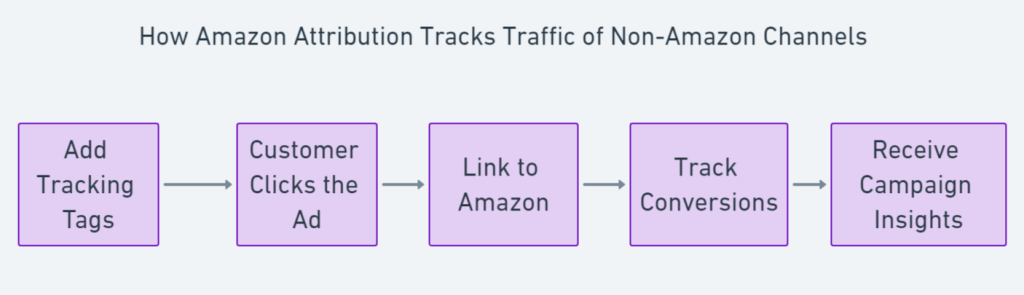
Amazon Attribution uses unique tracking URLs that are generated inside Seller Central. Each URL is tied to a specific campaign, traffic source, and product.
When a shopper clicks an attribution link:
- Amazon identifies the external traffic source
- The shopper is redirected to Amazon
- User actions are tracked anonymously
- Conversion data is attributed to the link
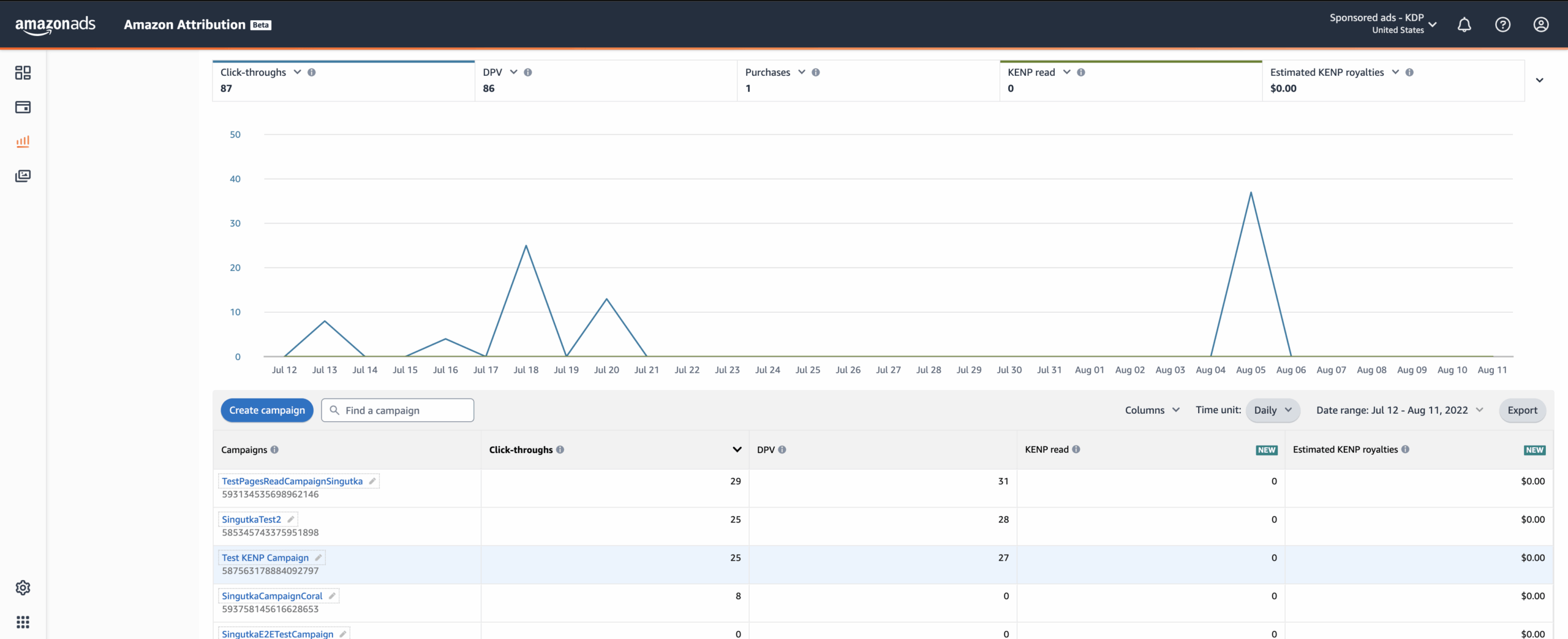
- Results appear inside the Attribution dashboard
Because this tracking happens within Amazon’s own system, the data is more accurate than third-party tracking pixels.
Key Metrics Tracked by Amazon Attribution
Amazon Attribution provides actionable metrics that reflect buyer intent and conversion quality. These include:
- Clicks
- Detail page views
- Add-to-cart actions
- Purchases
- Total sales revenue
These metrics allow sellers to evaluate traffic quality rather than relying on surface-level indicators like impressions or clicks alone.
Why Amazon Attribution Is Important for Growth
External Traffic Is No Longer Optional
Amazon’s marketplace is saturated. Organic visibility is limited, and internal ad competition continues to grow. External traffic allows sellers to:
- Reach new audiences
- Build brand awareness
- Create additional demand signals
- Reduce dependency on Amazon PPC
Amazon Attribution makes this traffic measurable and scalable.
Using Amazon Attribution to Scale External Advertising
External advertising can be profitable, but only when tracked properly. Without attribution, sellers risk spending money blindly.
Amazon Attribution allows sellers to identify:
- Which platform converts best
- Which campaign drives revenue
- Which creative attracts buyers
- Which audience segments perform poorly
This enables data-driven scaling and budget optimization.
Amazon Attribution and Organic Ranking
Amazon’s algorithm rewards listings that demonstrate strong performance signals. These include:
- Consistent sales velocity
- High conversion rates
- Buyer engagement
High-quality external traffic can improve these signals indirectly. When external traffic converts well, it can contribute to improved keyword relevance and organic ranking over time.
This makes Amazon Attribution particularly useful for:
- New product launches
- Competitive niches
- Products stuck beyond page one
- Seasonal or promotional pushes
Reducing Dependency on Amazon PPC
Amazon PPC remains essential, but rising CPCs make it risky to depend on it exclusively. Amazon Attribution allows sellers to diversify traffic sources such as:
- Google Search Ads
- Pinterest Ads
- Facebook and Instagram Ads
- Influencer traffic
- Content marketing and blogs
- Email marketing
Diversification improves stability and protects margins.
Step-by-Step Guide to Setting Up Amazon Attribution
Step 1: Access Amazon Attribution
Log in to Amazon Seller Central and go to Advertising → Amazon Attribution.
Step 2: Create a Campaign
Select the product ASIN or Brand Store you want to promote.
Step 3: Choose the Traffic Source
Examples include Google, Facebook, Pinterest, influencer marketing, or email.
Step 4: Generate the Attribution Link
Amazon generates a unique URL that tracks performance.
Step 5: Deploy the Link
Use the link in ads, blog posts, social media profiles, or influencer promotions.
Step 6: Monitor Performance
Review reports weekly and optimize based on conversion data.
Always create separate attribution links for each platform and campaign.
Best Platforms to Use with Amazon Attribution
Google Search Ads
Google Search Ads deliver high-intent traffic. Shoppers searching for product-specific keywords often convert well on Amazon. This channel is ideal for both branded and non-branded keywords.
Pinterest Ads
Pinterest works exceptionally well for discovery-based products such as home, décor, fashion, beauty, and lifestyle items. CPCs are often lower, making it cost-efficient for testing.
Facebook and Instagram
These platforms are powerful for retargeting. They work best when targeting warm audiences who have already interacted with your brand or product.
Blogs and SEO Content
Content marketing provides long-term traffic and trust. Review articles and comparison posts convert well when paired with Amazon Attribution links.
Influencer Marketing
Influencers drive trust-based conversions. Using unique attribution links for each influencer makes ROI measurement simple and transparent.
Amazon Brand Referral Bonus Explained
One of the most attractive benefits of Amazon Attribution is eligibility for the Brand Referral Bonus.
Amazon may reward sellers with:
- 10%–20% bonus on eligible sales
- Cashback credited to the seller account
This bonus effectively reduces Amazon referral fees and directly improves net profitability.
Pros of Amazon Attribution
Amazon Attribution offers several advantages for serious sellers.
- Accurate Amazon-native conversion tracking
- Clear visibility into external traffic performance
- Smarter ad budget allocation
- Strong support for product launches
- Indirect organic ranking benefits
- Eligibility for Brand Referral Bonuses
- Accountability for influencers and content partners
- Free to use
Cons of Amazon Attribution
Despite its benefits, Amazon Attribution has limitations.
- Limited historical data access
- No customer-level or email data
- Attribution window limitations
- Requires external advertising knowledge
- Learning curve for beginners
- Does not replace Amazon PPC
Understanding these limitations helps sellers use Attribution realistically and effectively.
Amazon Attribution vs Amazon PPC
Amazon Attribution and Amazon PPC serve different purposes and work best together.
| Feature | Amazon Attribution | Amazon PPC |
|---|---|---|
| Traffic Source | External | Amazon internal |
| Tracking Scope | Full funnel | On-Amazon only |
| CPC Pressure | Lower control | Rising costs |
| Ranking Impact | Indirect | Direct |
| Referral Bonuses | Yes | No |
Using both channels together creates a balanced growth strategy.
Amazon Attribution Links vs Amazon Affiliate Links
An Amazon affiliate link and an Amazon Attribution link are often confused, but they are designed for very different purposes and users. Amazon Associates links are primarily used by bloggers, influencers, YouTubers, and content publishers. The main goal of an affiliate link is to earn a commission when a visitor clicks the link and makes a qualifying purchase on Amazon. Affiliates are rewarded based on sales volume and product category, but they receive very limited insight into customer behavior beyond basic earnings and clicks.
On the other hand, Amazon Attribution links are designed for Amazon sellers and brand owners, not for earning commissions. Their purpose is to measure and optimize off-Amazon marketing efforts. Attribution links track detailed performance metrics such as product detail page views, add-to-cart actions, purchases, and total sales revenue generated from external traffic sources like Google Ads, social media, email marketing, and influencers.
In summary, Amazon affiliate links focus on monetization for content creators, while Amazon Attribution links focus on data, performance tracking, and scalable growth for sellers. Both are valuable tools, but they serve entirely different business objectives.
Advanced Strategies Using Amazon Attribution
Platform-Specific Links
Create separate attribution links for each platform, campaign, and influencer to isolate performance.
Creative Testing
Test multiple creatives using different attribution URLs to identify the highest-converting messaging.
Retargeting Funnels
Drive cold traffic first, then retarget engaged users using social ads.
Brand Store Traffic
Sending external traffic to Brand Stores can increase average order value.
Inventory Clearance Campaigns
Use external discounts and attribution links to move slow or aging inventory.
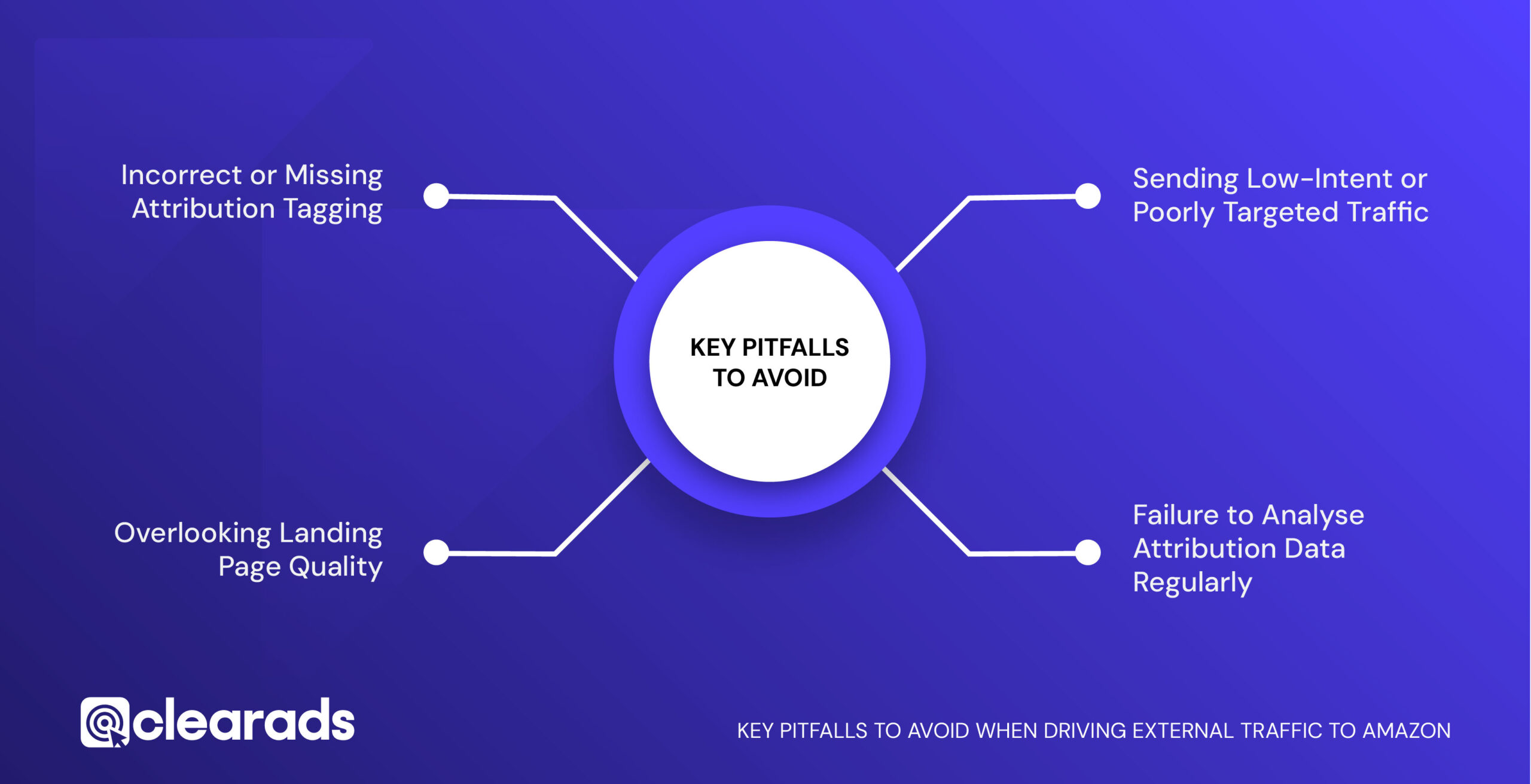
Common Mistakes to Avoid
- Driving traffic to poorly optimized listings
- Using a single attribution link across platforms
- Ignoring add-to-cart and engagement data
- Scaling ads without conversion proof
- Expecting instant results
Amazon Attribution works best with patience and optimization.
Best Practices for Long-Term Success
- Optimize listings before running external traffic
- Start with small test budgets
- Analyze attribution reports weekly
- Focus on buyer-intent traffic sources
- Combine Attribution with PPC and SEO
- Track profitability, not just sales
Is Amazon Attribution Worth It?
For serious Amazon sellers, the answer is yes.
Amazon Attribution transforms external marketing into a measurable, scalable growth channel. It helps sellers increase sales velocity, support organic rankings, reduce ad waste, and improve profitability through referral bonuses.
Final Thoughts
Amazon Attribution is more than a tracking tool. It is a strategic growth framework for sellers who want to move beyond basic Amazon PPC.
Sellers who use Amazon Attribution effectively gain:
- Better marketing visibility
- Lower risk when scaling ads
- More predictable growth
- Higher long-term margins
If your goal is sustainable Amazon growth, Amazon Attribution is no longer optional—it is essential.